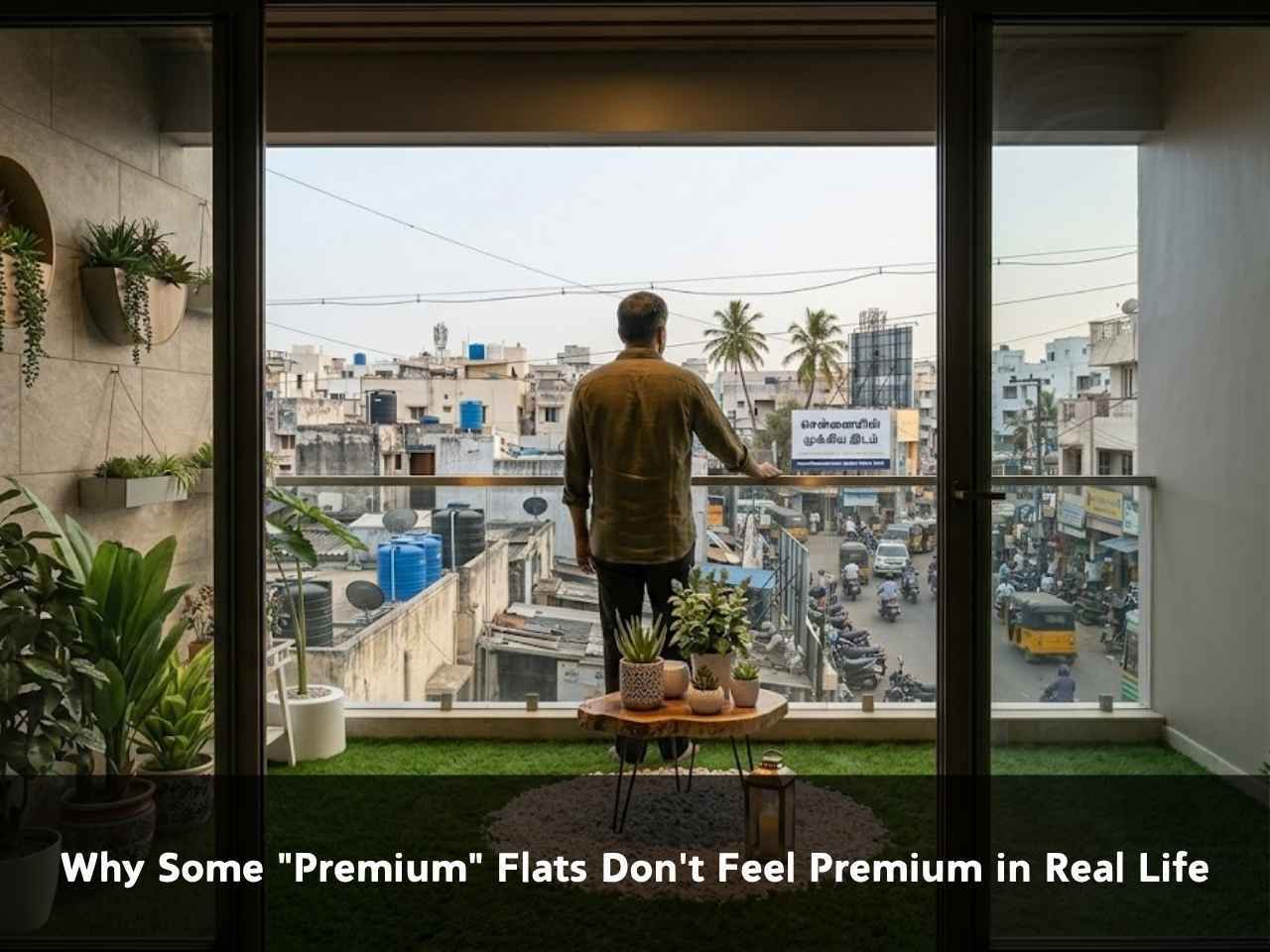

You see the brochure. Rooftop pool, grand lobby, imported marble floors. You visit the model flat, it looks incredible, and you book it feeling confident.
Then you move in, and slowly, something feels off. The lift takes too long. The corridor smells damp. You can hear your neighbour through the wall. Nothing is technically broken, but it doesn't feel like the premium home you paid for.
Here's the truth: a flat with a gym and a pool is not automatically a premium flat. A premium flat is one where your daily life feels easy. Not just on the day you visited, but every single day after that.
This is what most buyers miss before booking.
In this blog, we cover six things that determine whether a flat actually feels premium to live in: layout, ventilation, construction quality, amenities, location, and developer track record. If you're evaluating premium flats in Chennai right now, this is worth reading before you decide.
The sample flat is built to impress, warm lighting, custom furniture, and hand-finished walls. Your actual flat is built at scale alongside dozens of others, and that difference shows once you move in.
What most buyers don't realise is that the gap between a model flat and the real flat is often where disappointment begins. The smarter move is to spend less time in the model flat and more time elsewhere on the site. This is especially relevant if you're still deciding between a new launch or a resale home, both come with a very different kind of gap between expectation and reality.
What to do instead:
A flat can look spacious in the model and feel cramped the week you move your furniture in. The bedroom fits the bed but not the wardrobe. Two people can't stand in the kitchen at the same time. There's no space to dry clothes except the main balcony. These aren't minor inconveniences, they're things you deal with every single day.
Good layout design is invisible when it's done right. Everything just fits and the home works around you. Bad layout reveals itself in the first week of living and stays with you for years.
Check these during your site visit:
Chennai is humid for most of the year, and a flat that needs air conditioning running constantly just to feel comfortable is not premium living, it's expensive living. Well-designed modern flats in Chennai are built with cross-ventilation, wide windows, and shading elements that reduce heat naturally. You open the windows and the home breathes. The AC becomes a choice rather than a necessity.
This also shows up in your electricity bill every month. A flat with poor ventilation can cost you anywhere between Rs. 3,000 to Rs. 6,000 extra per month in cooling alone. Over ten years, that's a significant number that never appeared in the brochure.
Ask during your site visit:
Brochures love listing impressive specs: imported marble, VRV air conditioning, smart home systems. But specifications don't tell you how thin the walls are, what brand of electrical wiring was used, or whether the waterproofing in the bathrooms was done properly. These are the things you feel three to five years after moving in, not on the day of your site visit.
Ask the site engineer directly:
A quick on-site test: Knock on the wall shared with the next flat. If it sounds hollow, it's a lightweight partition wall, and you'll hear everything your neighbour says.
The pool, gym, and clubhouse look great on day one. But who is maintaining them in year five? That cost comes back to you every month as maintenance charges, and it's worth understanding before you book.
A reasonable maintenance charge for premium apartments in Chennai is around Rs. 3 to Rs. 5 per sq. ft. per month. Projects that quote significantly lower at the time of booking tend to either raise it sharply within two years or let the amenities quietly fall into disrepair.
To know more about where the Chennai property market is headed and what buyers are currently prioritising, read our breakdown of Chennai Residential Real Estate Trends, Latest Analysis.
The most honest check you can do:
A developer who maintains their older buildings well is one worth trusting with your new home.
Brochures make every location look ideal, metro nearby, IT park close, schools and hospitals within reach. But the metro stop might still be under construction, the IT park might be a 45-minute drive on a Monday morning, and the nearest supermarket might be further than the map suggests.
What's interesting is that Chennai homebuyers are increasingly moving away from chasing prestige locations and focusing more on daily convenience, commute time, infrastructure, and neighbourhood liveability. That shift is worth keeping in mind when a salesperson is selling you on an address rather than the actual experience of living there.
Ask yourself honestly before committing:
Construction quality, layout decisions, maintenance planning, all of it ultimately comes back to one question: who built this, and do they care about what happens after possession?
The only honest way to answer that is to look at what they've already delivered. Before you commit to any project, it's worth knowing how to verify a builder before buying a flat in Chennai, from RERA registration to legal checks and on-ground track record. Most buyers skip this step entirely and regret it later.
How to check:
That one visit will tell you more than three hours in a model flat ever will.
Premium is not a feature list. It's the feeling of coming home after a long day and having everything just work, the lift is there, the flat is cool, the space makes sense, and the building is well looked after.
That feeling is built into a project long before you ever visit the model flat. It comes from layout decisions, the materials used, the ventilation planning, and how seriously the developer takes maintenance after possession.
When you're spending 80 lakhs to a crore on flats in Chennai, that's exactly what you should be evaluating. The checklist above is a good place to start.