

Buying a flat in Chennai is not just a purchase decision; it is a long-term financial commitment that affects your stability, liquidity, and future resale value. Yet, many buyers spend more time comparing amenities than verifying the builder. That is a mistake. A project with good marketing but weak legal or execution fundamentals can lead to delays, disputes, or poor construction quality. This guide explains a structured and detailed approach to verify a builder using RERA data, legal checks, and real project performance.
To verify a builder properly, you need to evaluate three core areas: regulatory compliance, legal clarity, and execution history. Start by confirming that the project is registered with the Tamil Nadu Real Estate Regulatory Authority (TNRERA), which gives you access to verified project data. Next, validate land ownership and statutory approvals through legal documents rather than relying on verbal assurances. Finally, assess the builder’s track record by studying completed projects and actual buyer experiences. If any one of these areas shows inconsistency, the overall risk of the purchase increases significantly.
The Real Estate Regulatory Authority was introduced to reduce information asymmetry between builders and buyers. Before RERA, buyers had limited visibility into project timelines, approvals, and execution status. With TNRERA, builders are required to disclose project details, timelines, and progress updates. This creates a baseline level of transparency, but only if you use the information correctly.
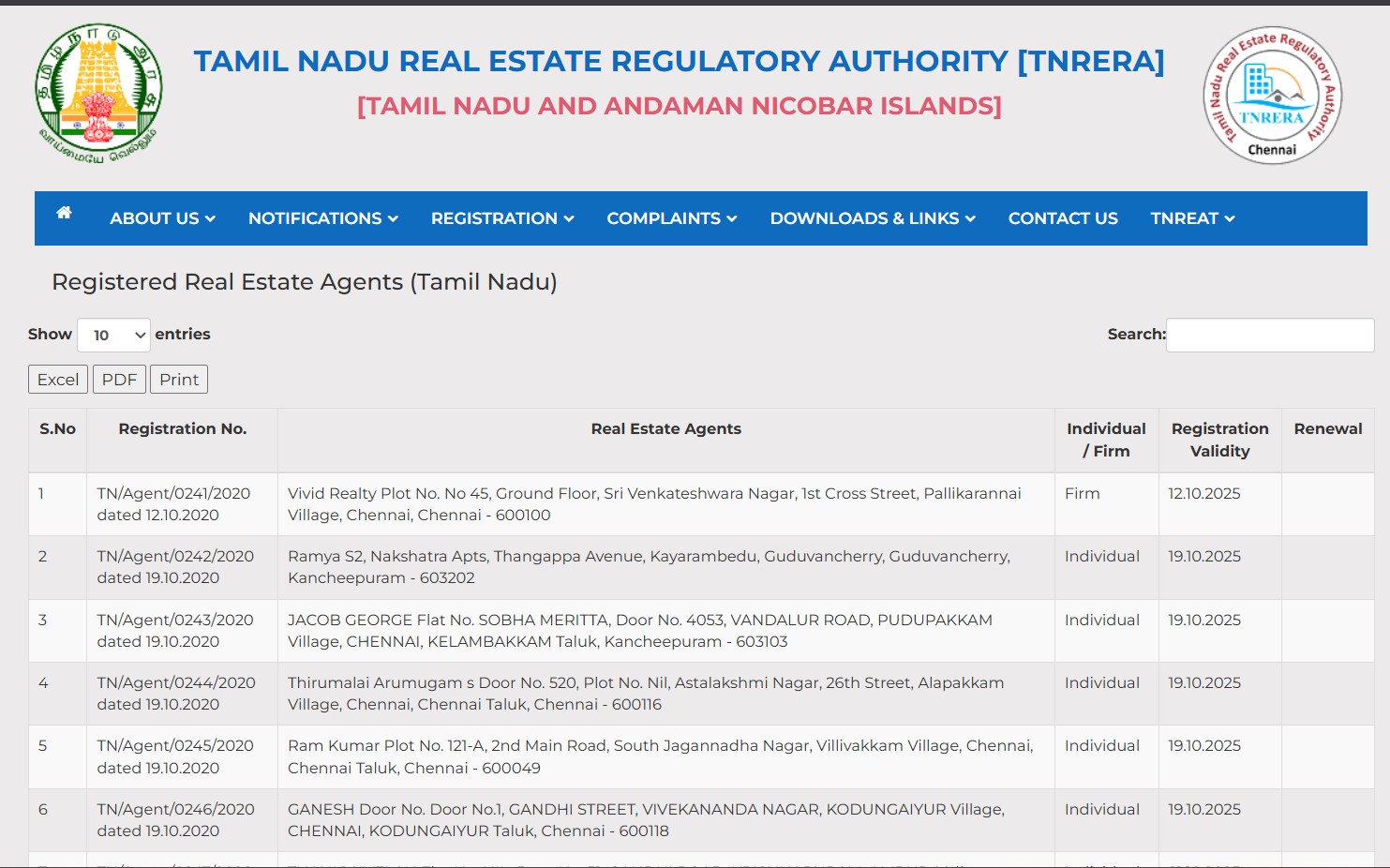
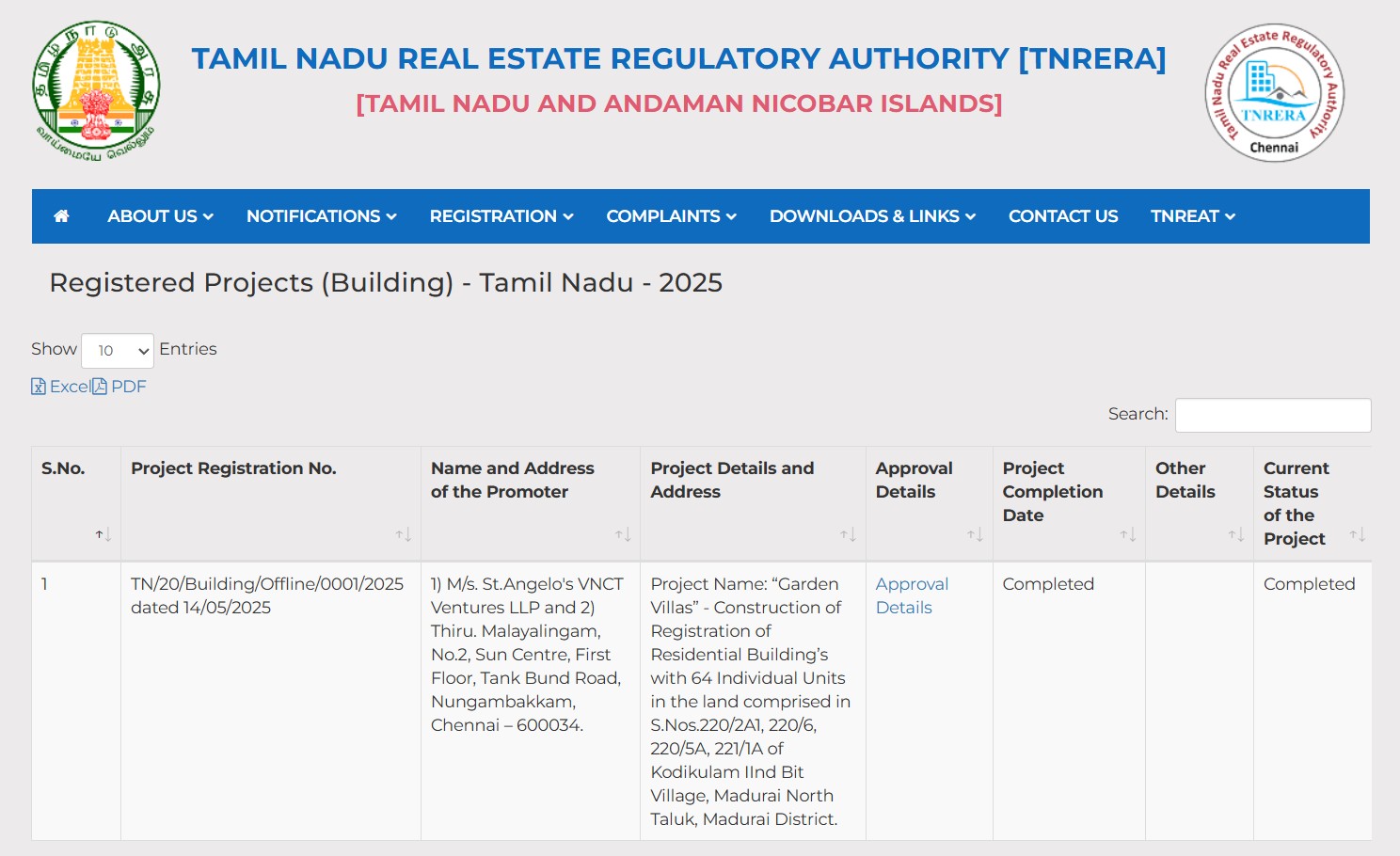
When you access a project on the TNRERA portal, you should review multiple layers of information. This includes the builder’s registered name, project specifications, approved layout, number of units, and declared completion timeline. In addition, most projects provide periodic construction updates, which indicate whether the project is progressing as planned.
Many buyers stop at verifying registration status, which is superficial. The real value lies in comparing declared timelines with actual progress and identifying whether the builder has a pattern of delays across projects.
If a builder has committed to a specific completion date in RERA but has a history of revising timelines or delaying previous projects, that is a strong indicator of execution risk. Similarly, if construction updates show slow progress relative to the timeline, it suggests possible delays in the future. RERA data should be treated as a performance signal, not just a compliance checkbox.
The legal status of the land is one of the most critical aspects of property verification. Even if the building is constructed properly, unclear land ownership can result in disputes that affect your ownership rights.
To establish title clarity, you need to verify documents of the land records such as the Patta, which confirms ownership, and the Encumbrance Certificate, which shows whether the property has any financial or legal liabilities. The parent documents provide a historical chain of ownership, helping you confirm that the land has been transferred legally over time.
Any inconsistency in these documents, such as missing links in ownership history or recent transfers before project launch, should be treated with caution. These patterns often indicate underlying legal complications.
Apart from land ownership, the project must comply with planning regulations. Approvals from authorities such as CMDA or DTCP confirm that the layout and construction plan are legally valid.
Some builders market projects while approvals are still pending, using phrases like “approval under process.” This creates a false sense of progress. In reality, such projects carry regulatory risk, as approvals may be delayed, modified, or even rejected.
A legally sound project will have all major approvals in place before being marketed aggressively. As a buyer, you should verify these approvals independently rather than relying on brochures or verbal claims.
A builder’s past projects provide the most reliable evidence of their execution capability. Marketing promises are easy to make, but delivery performance reflects operational discipline, financial planning, and construction quality.
You should examine how many projects the builder has completed and whether those projects were delivered within the promised timelines. Delays of a few months may be manageable, but consistent delays across multiple projects indicate systemic issues.
Construction quality should be assessed not just at handover but after a few years of usage. Issues such as water leakage, structural cracks, or poor maintenance often become visible over time. Older projects provide a more realistic picture than newly completed ones.
The most effective way to evaluate a builder’s track record is to visit completed projects. Observing the physical condition of the building, common areas, and infrastructure gives you direct insight into construction quality.
Speaking with residents provides even deeper insights. They can tell you whether the project was delivered on time, how the builder handled post-handover issues, and whether there were any recurring problems. If feedback across multiple projects highlights similar issues, it is a clear indicator of risk.
Real estate projects require consistent funding over several years. If a builder lacks financial stability, construction progress slows down, leading to delays and, in some cases, project stagnation.
Builders with strong financial health typically maintain steady construction progress and avoid excessive reliance on advance bookings. In contrast, financially stressed builders often depend heavily on pre-launch sales to fund construction.
If a builder is running multiple projects simultaneously without visible progress, it may indicate resource constraints. Similarly, aggressive discounting, limited-time offers, and pressure-based sales tactics often signal a need for immediate cash flow.
Financial instability does not always appear in official records, so you need to infer it from project progress and market behavior.
The sale agreement defines the legal relationship between you and the builder. It determines your rights in case of delays, changes in specifications, or disputes.
The agreement should clearly specify the possession date and include compensation terms if the builder fails to deliver on time. It should also detail construction specifications, ensuring that what is promised is contractually binding.
Payment schedules should be linked to construction progress rather than fixed dates, as this reduces your risk if the project is delayed. The agreement should also define cancellation terms and refund conditions, along with your undivided share of land.
Many agreements are drafted in a way that protects the builder more than the buyer. Clauses related to delays, penalties, and changes in specifications are often structured to limit the builder’s liability.
Without a legal review, buyers may unknowingly accept unfavorable terms. A property lawyer can identify such clauses and help you understand the actual risk before signing.
Check out our complete homebuyer checklist here
Even well-known builders can have disputes. What matters is not the presence of complaints, but the pattern and frequency.
You can review complaint records on RERA portals, consumer court databases, and online buyer forums. These sources provide real-world insights into issues faced by previous buyers.
Isolated complaints are common in any large-scale project. However, repeated complaints about delays, poor construction, or legal disputes indicate deeper operational problems. You should also evaluate how the builder responded to these issues, as this reflects their approach to customer service and accountability.
Before making a final decision, you should confirm that the project is properly registered under RERA and that all details align with the builder’s claims. The land title should be verified independently, and all necessary approvals must be in place. The builder’s track record should show consistent delivery without recurring issues, and the sale agreement should be reviewed carefully to avoid unfavorable terms. Skipping any of these steps increases your exposure to risk.