
Imagine finding two apartments in Chennai with the exact same price, the same modern design and the same swimming pool. Yet, one building has a long waiting list of eager buyers while the other struggles to find anyone who wants to live there.
The big difference is almost never found inside the project gates. Instead, it comes down to a simple reality check: how does the neighborhood perform on an ordinary, regular day?
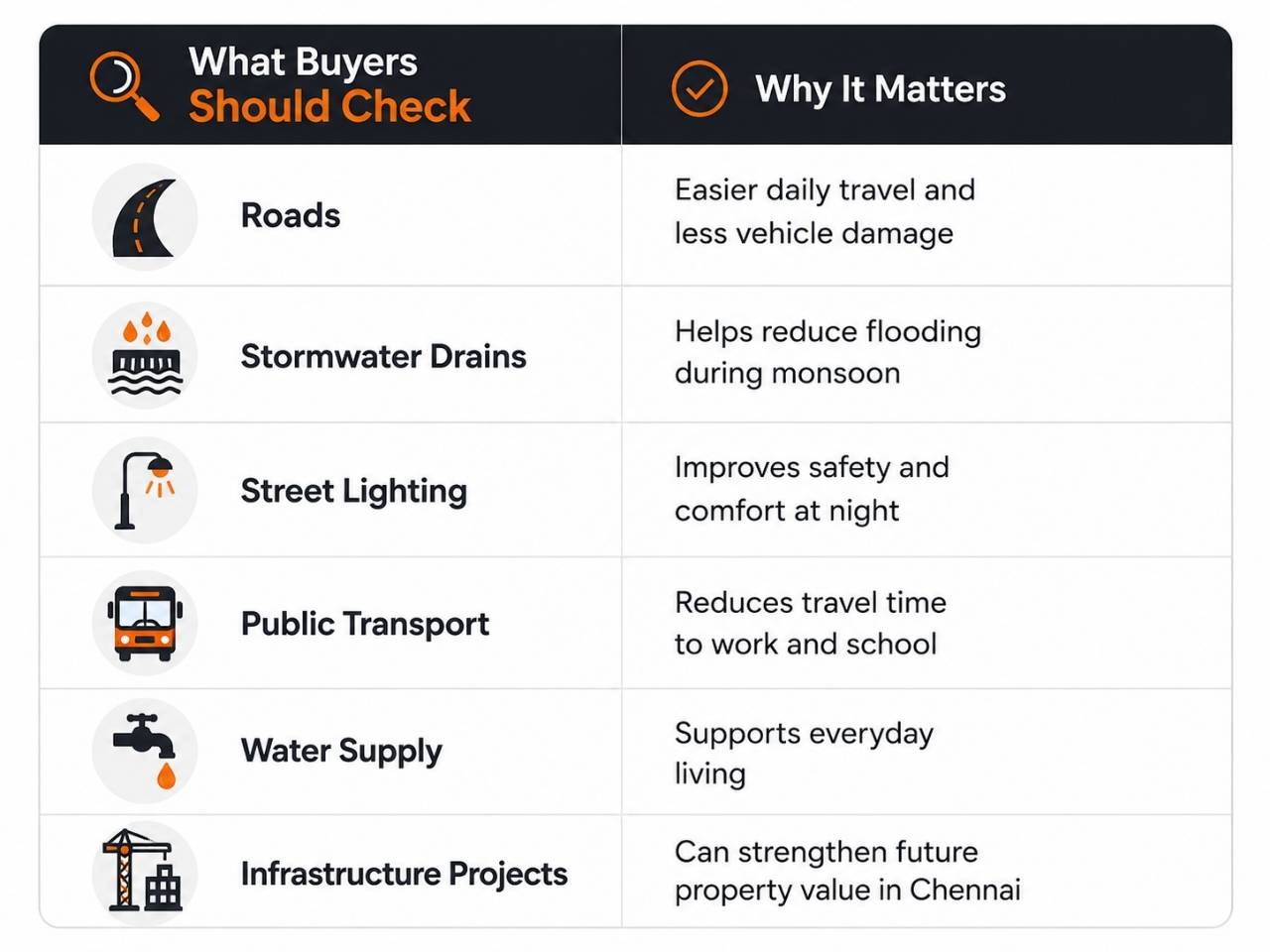
Modern homebuyers are looking far beyond flashy sales flyers. Before buying a home, they look at how public systems affect their daily life by asking very practical questions:
As Chennai expands rapidly, neighborhood infrastructure development has become the top factor in how much a property is worth. While price and indoor luxury still matter, smart buyers now judge a home by how well the surrounding area works the minute they step outside. This blog breaks down how public infrastructure trends are redefining property demand and long-term value across Chennai.
A home purchase is often influenced by what buyers see during the site visit. The apartment layout, common amenities and overall presentation of the project naturally attract attention.
However, daily life extends beyond the gates of the property.
A family commuting to work and school every day, experiences the neighbourhood far more than the clubhouse. A senior citizen depends more on accessible roads and public infrastructure than a rooftop amenity. Over the years, these practical considerations play a major role in shaping a resident’s living experience.
This is one reason why infrastructure often influences property demand in ways that are not immediately visible.
Chennai’s history with the monsoon has made one thing clear: infrastructure can directly affect the quality of life in a neighbourhood.
Areas that experience frequent waterlogging often face challenges that are beyond just inconvenience. Traffic movement becomes difficult, access to essential services may be affected and residents may find it hard to continue their daily routines.
Recognising this, the Greater Chennai Corporation has been working on addressing gaps in the city’s drainage network. Recent reports on the city’s stormwater drain network improvements highlight ongoing efforts to strengthen flood management ahead of the monsoon season.
For homebuyers, projects like these matter because they influence confidence in the property and the locality. Homebuyers want reassurance that an area can handle future growth and seasonal challenges without affecting everyday life.
Velachery is one of the best example that shows how buyer priorities have changed over the years. While connectivity continues to be one of Velachery’s biggest advantages, many homebuyers today are also paying attention to practical things such as flood resilience before making a decision.
Upgrades in infrastructure rarely cause an immediate rise in property prices. However, they often contribute to the steady demand that supports long term value of the property. This can be seen across several areas discussed in our analysis of Chennai real estate market growth.
Not every factor that influences buyer confidence is related to connectivity or transportation. Something as simple as street lighting can shape how people experience a neighbourhood.
Buyers may not specifically ask about streetlights during a property visit, but they notice whether an area feels active, accessible and comfortable at night. Anna Nagar is a good example for this.
The Greater Chennai Corporation’s recent streetlight monitoring initiative reflects the growing importance of maintaining public infrastructure that residents depend on every day.
Neighbourhoods that encourage walking, support local businesses and remain active during the evening often creates a stronger impression on homebuyers in Chennai. Public infrastructure contributes significantly to that experience.
This is one of the reasons established residential areas like Anna Nagar and Nungambakkam continue to attract people even when newer projects emerge elsewhere. Buyers are not just evaluating a building. They are evaluating the environment around it.
There was a time when certain neighbourhoods attracted attention primarily because of their reputation. But today, buyers are taking a broader view.
A recognised address still carries value, but many people are also considering practical factors such as commute times, accessibility, civic infrastructure and overall convenience.
This shift in the buyer’s view is one of the reasons buyers are actively looking beyond prestige-driven decisions in buying a home. We explored this trend in detail in our article on why Chennai homebuyers don't prefer prestige locations.
The same mindset is contributing to growing interest in several emerging localities in Chennai, where infrastructure development is helping shape future residential demand.
Most buyers focus on current market value when evaluating a property. But it is equally important to understand what could influence that value in the future.
Infrastructure projects, drainage improvements, public amenities and neighbourhood maintenance all contribute to how a locality evolves over time. These factors influence not only buyer demand but also the overall living experience.
Before making a decision, it is worth evaluating the neighbourhood with the same attention given to the property itself. A detailed homebuyer checklist for buying property can help buyers assess both aspects more effectively.
Twice a year, right before each half-yearly due date, is a reasonable minimum. Owners managing multiple properties, or anyone who has recently bought, inherited, or transferred a flat, benefit from checking more often until the records settle and show no pending mismatches. A quick check before a major life event, like applying for a loan or planning to sell, is worth the two minutes it takes.
At the end of the day, a premium apartment doesn’t mean much if you can’t safely walk on the street at night or drive out of the community during heavy rainfall.
While advertisements focus on indoor luxury and clubhouses, the real living experience also depends on what happens outside the community. Working stormwater drains, reliable streetlights, and usable roads are the basic, unglamorous essentials that actually sustain a property's value and demand in Chennai over the long run.
Before committing to a property, it is always worth stepping past the property gates to look at how the locality functions on a regular day.