
Greater Chennai Corporation residents can now check and pay property tax, along with water and sewerage charges, through a single WhatsApp number. The civic body added this option in June 2026, folding Chennai Metro Water and Sewerage Board charges into a chatbot that already handled tax payments and other services. For property owners and homebuyers alike, this changes a basic question from “where do I even start” to “which of two methods suits me.” This guide walks through both, plus when checking dues actually matters.
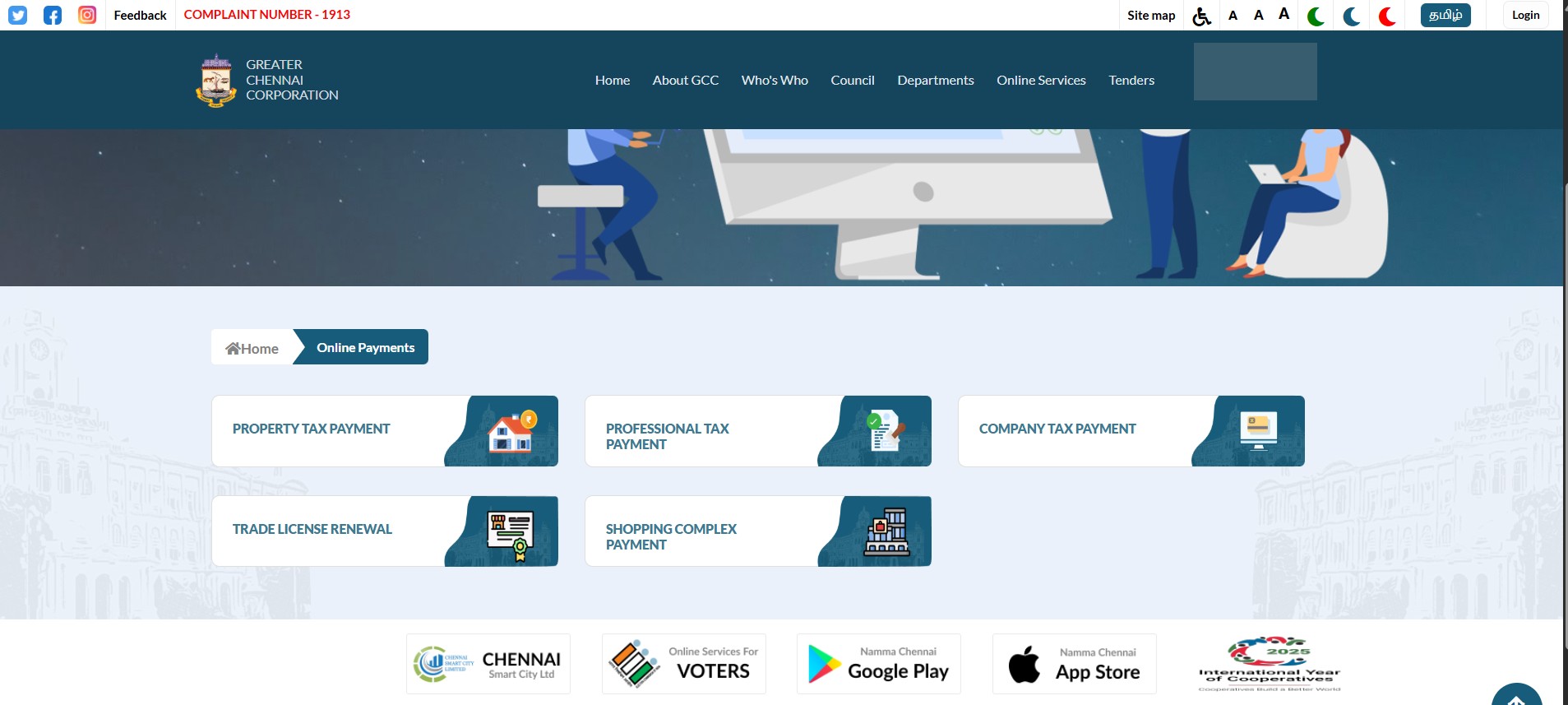
The Greater Chennai Corporation website remains the primary portal for property tax. It works for both checking dues and paying them, and it shows a full breakdown rather than just a final amount.
Before you start, keep these
details ready:
These appear on any previous tax receipt. If you do not have one, the GCC website's “Know Your Zone” tool can find your zone and division using just your address.
Your Property Tax Assessment Number, commonly called PTAN, is the newer identifier the corporation has been rolling out. Where available, it works as a single lookup field instead of the four-part zone and
bill number combination.
The WhatsApp option skips the website altogether, which matters if you find government portals clunky on a small screen. It launched as an extension of the corporation's existing digital services, and as of June 2026, it also handles water and sewerage charges from the Chennai Metro Water and Sewerage Board.
Residents can message the GCC's official WhatsApp number, 9445061913, to pay property tax, water charges, and sewerage charges in one place. The chatbot also pulls up outstanding dues, past payment details, and digital receipts on request. The corporation has positioned this as a round-the-clock option, meant to cut down the time residents spend travelling to corporation offices or waiting in queues during office hours.
This single number now covers water and sewerage billing from the Chennai Metro Water and Sewerage Board too, which previously sat on a separate system. Bringing both under one chatbot means a homeowner no longer needs two different logins to manage two different bills for the same address.
Tax payment is the newest addition to a chatbot that already handled birth and death certificate downloads and grievance registration. That overlap matters more than it sounds for property owners: a death certificate is often the first document needed before a property can be legally transferred to an heir, and having both that certificate and the tax payment on the same WhatsApp thread removes one more reason to visit a corporation office in person.
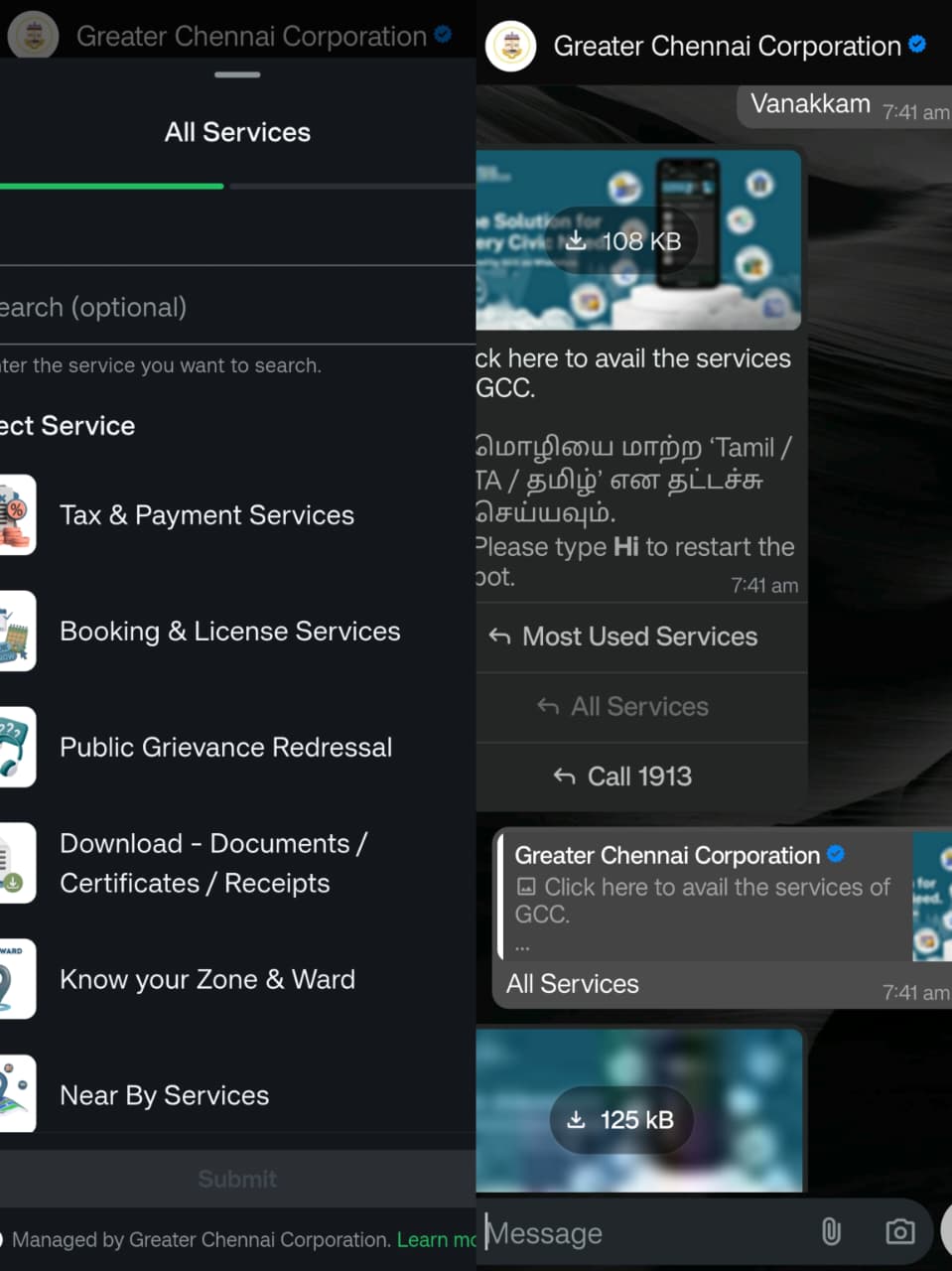
Keep your registered mobile number and basic property details on hand, since the chatbot uses these to match your dues to the correct property record.
Both methods show you what the corporation has on record, which is not always the same as what you actually owe. If a payment you made does not reflect in your dues, or the assessed value seems higher than it should be, do not pay again to “be safe.” Keep your old receipt and raise the discrepancy through the corporation's grievance channel instead, quoting your zone, division, and bill number. Disputed entries get corrected on review, but only if someone flags them.
Chennai property tax falls due twice a year, and a 15-day grace period follows each due date before a penalty kicks in on the outstanding amount. Checking your dues periodically, rather than waiting for a paper notice, helps you catch errors in your assessment and confirm any rebate has actually been applied. Owner-occupied residential buildings, for instance, qualify for a rebate on the assessed value, and that detail is worth confirming rather than assuming.
Owners who manage more than one property in the city face a separate risk: it is easy to lose track of which bill belongs to which address, especially across different zones. A quick check against each property's own zone and bill number keeps the records straight before they pile up into a larger problem.
Pending property tax or water charges on a flat do not disappear when ownership changes hands. They sit against the property itself, not the previous owner personally, which means an unpaid bill can become the new buyer's problem after registration. This is exactly why a tax dues check belongs on every resale buyer's list, alongside verifying the title deed and confirming the undivided share recorded for the unit.
Before finalising any resale deal, ask the seller for the zone, division, and bill number (or PTAN) for the property, and run the same check yourself through either method above. A seller with nothing to hide will hand this over without hesitation. If they cannot produce a recent receipt or grow vague about it, treat that as a reason to dig further before registering the property in your name.
This is more common than it sounds, especially for inherited properties or flats bought years ago where the paperwork has gone missing. The GCC website's “Know Your Zone” tool solves this by accepting your address and returning the zone and division number, which you can then use to look up your bill.
If your original documents are missing entirely, including the sale deed or past tax receipts, the process gets more involved. You may need to apply for a Non-Traceable Certificate before you can re-establish your records with the corporation.
Twice a year, right before each half-yearly due date, is a reasonable minimum. Owners managing multiple properties, or anyone who has recently bought, inherited, or transferred a flat, benefit from checking more often until the records settle and show no pending mismatches. A quick check before a major life event, like applying for a loan or planning to sell, is worth the two minutes it takes.
Yes, and you should not skip this step. The GCC website and the WhatsApp chatbot both work using the property's own zone, division, and bill number, not the owner's personal login, so a buyer can run the same check independently rather than relying entirely on what the seller reports. This is a small piece of a much longer resale due diligence process, but it is one of the simplest to verify in minutes.
Chennai homeowners and buyers now have two straightforward ways to check property tax dues: the GCC website for a detailed breakdown, and the WhatsApp chatbot for speed. Whichever you use, build the habit of checking before each due date, and treat it as a non-negotiable step before buying any resale flat. If you are exploring verified apartment listings in Chennai, a clean tax record is one less thing to worry about before you sign.